To clean carpets at home, vacuum slowly in overlapping passes, blot (never rub) stains with a cloth and a mild solution, deep clean by hand or with a hired extraction machine, then dry the room fast with airflow. Most household carpets need a professional clean once a year.
Bay of Plenty homes face unique carpet cleaning challenges. Beach sand tracked in from Mount Maunganui and Papamoa acts like sandpaper on carpet fibres, while high humidity means carpets stay damp longer after cleaning. Add in New Zealand's prevalence of wool carpet, and you need the right approach to avoid damage.
This guide walks you through proper carpet cleaning techniques for Tauranga homes, from routine maintenance to deep cleaning and the mistakes that wreck carpets.
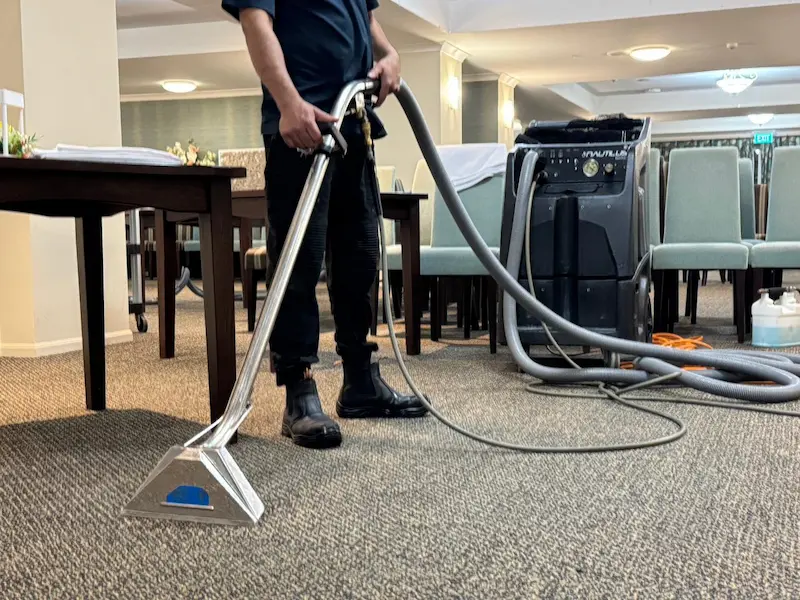
What You'll Need
Gather everything before you start so the carpet isn't left half-wet while you hunt for supplies.
| Item | Why it matters |
|---|---|
| Vacuum with strong motor and clean filter | Weak suction leaves grit that turns to mud when wet |
| pH-neutral carpet cleaner (wool-safe) | Protects fibres from damage and colour loss |
| White cloths or sponges only | Coloured cloths can transfer dye to wet carpet |
| Warm (not hot) water | Hot water can set stains and shrink wool |
| Soft-bristle brush | Agitates solution without damaging pile |
| Fan or dehumidifier | Essential for drying in Tauranga's humidity |
Wool Warning
New Zealand homes have a lot of wool carpet. Strongly alkaline supermarket cleaners and hot water can felt, shrink and permanently dull wool. Use pH-neutral products only and always test in a hidden corner first.
Step 1: Prepare the Room
Move furniture out completely, or place foil or plastic tabs under wooden and metal legs to prevent staining while the carpet dries. Pick up toys, cords, and small rugs. Open windows for ventilation.
A proper deep clean means clearing the room. For weekly maintenance, you can work around furniture, but for anything involving wet cleaning, exposed carpet dries faster and more evenly.
Step 2: Vacuum Properly (Most People Rush This)
The technique matters more than the machine. Work in slow, overlapping passes - north-south across the room, then east-west. Make 3-4 passes over high-traffic lanes. Empty the bin or change the bag first, because a full vacuum loses half its suction.
Proper vacuuming lifts surface grit out of the way so stains become visible and so wet cleaning doesn't turn dry soil into mud. Beach sand tracked in from Mount Maunganui and Papamoa is particularly abrasive - each grain acts like sandpaper on carpet fibres when walked on.
Spot the stains while you vacuum and mark them with sticky notes or small objects nearby. You'll treat these next before they disappear under cleaning solution.
Step 3: Treat the Stains
The universal rule: blot from the outside in, never rub. Rubbing pushes the stain into the backing and fuzzes the pile. Fresh stains come out; matured stains fight back.
Stain Quick-Reference
| Stain | First move | Then |
|---|---|---|
| Tea, coffee, juice | Blot up liquid immediately with white cloth | Apply diluted vinegar solution, blot, rinse |
| Red wine | Blot, apply salt to absorb remaining liquid | Club soda or commercial wine stain remover |
| Pet urine | Blot thoroughly, enzyme cleaner is essential | Odour lives in underlay - may need professional treatment |
| Grease or oil | Scrape up solids, apply baking soda to absorb | Dish soap solution, blot, rinse well |
| Mud and sand | Let it dry completely first - wet mud spreads | Vacuum dried mud, then spot clean residue |
| Ink | Blot with isopropyl alcohol on white cloth | Work from outside in, replace cloth frequently |
Old, set, or repeatedly-scrubbed stains usually need heat, dwell time and extraction to shift. If your DIY efforts aren't working, that's the natural point to consider professional carpet cleaning in Tauranga.
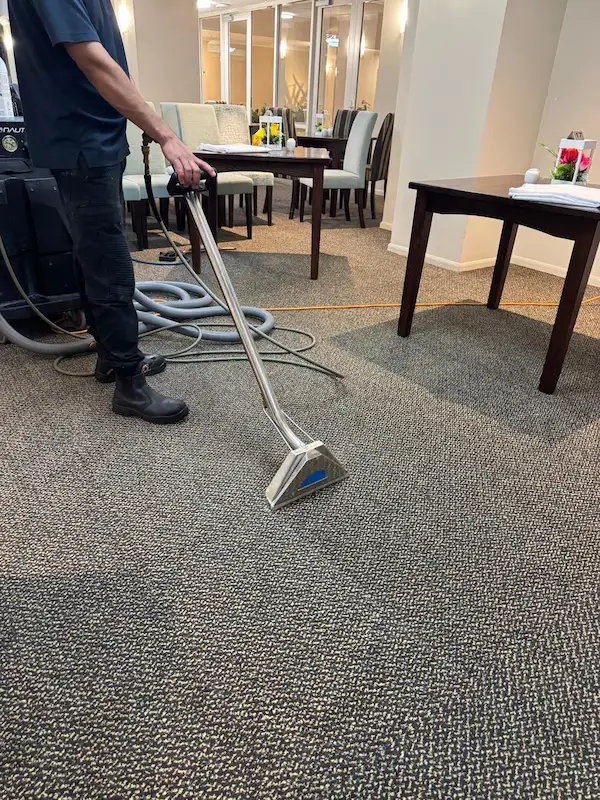
Step 4: Deep Clean the Carpet
Once the grit and spots are gone, deep clean. You have two realistic home options.
Option A: By Hand
Mix a wool-safe solution or diluted white vinegar with warm water (1 part vinegar to 3 parts water). Work in one-metre sections using gentle circular motions with a soft brush. Don't soak the carpet - use just enough solution to dampen.
The critical step most people skip: rinse with a clean damp cloth to lift residue. Leftover detergent is a soil magnet and is why DIY carpets re-soil within weeks. That sticky feeling after cleaning? That's residue attracting new dirt.
Option B: Hired Extraction Machine
Hire units are available from most Tauranga hardware and grocery stores. Vacuum and pre-treat stains first, or you'll just make mud. Follow the manual exactly, don't over-wet, and do a dry pass over every wet pass.
Be realistic about the limits: hire units have a fraction of the suction and heat of professional equipment, so they leave more water in the carpet and dry slower - which is exactly the problem in a humid climate.
| Hired machine | Professional extraction | |
|---|---|---|
| Suction/heat | Limited - leaves carpet wetter | High-powered truck mount or portable |
| Typical dry time | 12-24 hours in Tauranga humidity | 4-6 hours with proper extraction |
| Cost | $60-100/day plus solution | From $150 for standard 3-bedroom |
| Best for | Light refresh, small areas | Deep soil, stains, annual clean |
Step 5: Dry It Fast - This Is the Step Bay of Plenty Gets Wrong
This is the most important section for Tauranga homes. Our humidity means a carpet that would dry in 4 hours elsewhere can sit damp for a day or more. Damp underlay plus warm still air equals mould and that musty smell within 24-48 hours.
Practical steps for fast drying:
- Open windows on opposite walls for cross-flow ventilation
- Run a fan at floor level pointed across the pile
- Use a dehumidifier in winter or humid weather
- Keep furniture off until fully dry
- Don't walk on it in shoes
How to test if it's dry: Press your knuckle firmly into the carpet. If it feels cold or damp, it's not dry. The backing and underlay hold moisture longer than the pile surface.
Already smell musty or see black speckling? That's not a carpet cleaning problem - that's mould. See mould removal and remediation. Carpet soaked from a leak or flood needs flood and water damage restoration, not a home clean.
5 Mistakes That Wreck Carpets
- Over-wetting: Soaking the carpet overwhelms the underlay and takes days to dry, inviting mould
- Rubbing stains: Spreads the stain, pushes it deeper, and fuzzes wool pile permanently
- Hot water on wool: Causes felting and shrinkage that can't be reversed
- Skipping the rinse: Detergent residue attracts soil - your carpet gets dirty faster
- Using foam shampoo without extraction: The foam dries into sticky residue that never comes out without professional equipment
How to Keep Carpets Clean Between Deep Cleans
Deal with spills immediately
The first 30 seconds matter most. Blot up liquid before it soaks through to the backing. The longer a stain sits, the harder it sets. Keep white cloths accessible in high-risk areas.
Vacuum on a schedule
Twice a week in traffic lanes (hallways, living room pathways), weekly elsewhere. More frequent vacuuming removes abrasive grit before it cuts fibres. A maintained carpet lasts years longer.
Doormats and a shoes-off rule
Most carpet soil comes from outside. Beach sand and the clay-heavy soil common after Tauranga rain are particularly damaging. Good quality doormats inside and outside each entrance, combined with a shoes-off household rule, can reduce carpet cleaning needs by half.
Manage pets
Regular brushing reduces shed hair and dander load. Catch accidents immediately - enzyme cleaners work on fresh pet urine but struggle once it reaches the underlay. Pet households benefit from 6-monthly professional cleaning rather than annual.
When to Stop DIY and Call a Professional
Home cleaning handles maintenance. Some situations need professional equipment and expertise:
- Stains that reappear after drying - wicking from the backing means the stain is deeper than surface cleaning reaches
- Pet odour you can smell on a warm day - urine in the underlay needs treatment you can't DIY
- Carpet that still looks flat and grey after cleaning - embedded soil needs professional extraction
- Allergy or asthma in the house - proper extraction removes allergens that vacuuming misses
- End of a tenancy - documented professional cleaning protects your bond
- Anything wet more than 48 hours - mould risk requires professional assessment
Cleanify has cleaned carpets across Tauranga since 2002
We serve Mount Maunganui, Papamoa, Te Puke, Bethlehem, Greerton, Welcome Bay, Katikati and the wider Bay of Plenty. Our truck-mounted extraction removes more water for faster drying, and we use wool-safe products throughout.